
The Ayahuasca Ceremony: What to Expect Hour by Hour
For millennia, the Ayahuasca ceremony has served as a powerful, sacred, and often challenging path to healing, insight, and spiritual awakening. When approached with respect and preparation (including the critical Dieta), the experience can be profoundly transformative.
However, the unknown can breed anxiety. This comprehensive hour-by-hour guide demystifies the structure of a traditional ceremony, providing clarity on the phases you will move through—from initial ingestion to the final moments of integration.
Phase 1: Preparation and Intention Setting (Hours 1-2)
The true ceremony begins long before the brew is consumed. This phase focuses on creating the ideal “set” (mindset) and “setting” (environment).
The Sacred Space (The Maloca)
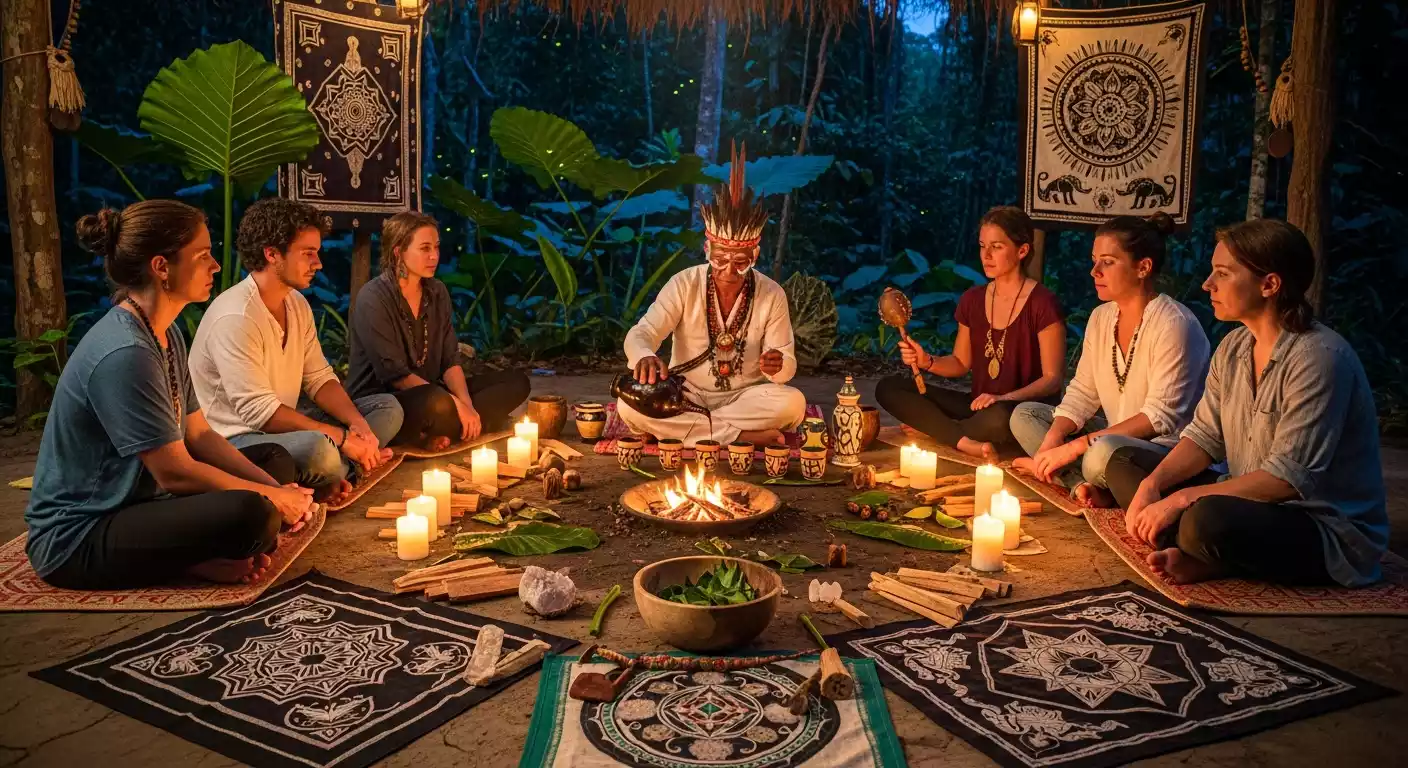
Ceremonies are typically held in a Maloca (a large, traditional hut or ceremonial space). The space is usually dimly lit or dark, emphasizing introspective focus. You will be assigned a personal space—often a mattress, pillow, and blanket—alongside other participants.
The Role of the Shaman (Curandero)
The Shaman or facilitator is the anchor of the ceremony. They maintain the energetic safety of the space and direct the flow of the night. This is the time when they may review safety protocols and answer final questions.
Final Intentions
A crucial component is setting a clear intention. You are not just taking a psychedelic; you are asking a “plant teacher” for guidance.
- Actionable Tip: Quietly review your deepest intention (e.g., “Show me the root of my fear,” or “Help me forgive myself”). Write it down beforehand to maintain focus during the intensity of the experience.
Ingestion of the Brew (The Moment of Commitment)
After the introductory talk, the Shaman will purify the space and begin serving the Ayahuasca.
- You will approach the Shaman to receive your portion (a small cup of the dark, viscous brew).
- Take a moment to hold your intention before consuming the bitter liquid.
- Once served, you return quietly to your space to await the onset.
Phase 2: The Onset (Hour 2 – Hour 2.5)
This is the initial transition period as the MAOIs from the B. caapi vine take effect and the DMT begins to cross the blood-brain barrier.
Physical Manifestations
- Taste and Smell: The brew is notoriously earthy and bitter. A strong, distinctive smell may linger.
- Body Load: You may notice a slight heaviness, buzzing, or discomfort in the stomach. This is the first sign that the medicine is working.
- Anxiety: A common feeling is a spike in anxiety or nervousness as you anticipate the experience. Do not fight this. Focus on slow, deep breaths.
Subtlety of Vision
The first signs of visual activity may begin: a slight sharpening of colors, subtle geometric patterns behind closed eyelids, or a feeling of motion when still. The world feels subtly shifted.
Phase 3: The Peak and Purge (Hour 2.5 – Hour 4.5)
This is the most intense, challenging, and often rewarding phase of the ceremony.
The Purge
The physical and psychological cleansing process, often referred to as the “purge,” typically occurs in this window.
- Vomiting and Diarrhea: These are the most common forms, facilitated by an individual bucket or designated area. The purge is viewed not as sickness, but as the physical expulsion of negative energy, toxins, and stored trauma.
- Emotional Release: Crying, shaking, yawning, and deep sighing are also forms of purging, representing the release of psychological tension.
Key Insight: Do not resist the purge. Surrender is critical. The Shaman often says, “Whatever needs to come out, let it come out.”
Profound Visionary States
Once the purge has subsided, the deepest level of the journey often begins. This is where you encounter the visionary and emotional core of the medicine.
- Visual Content: You may experience vivid, complex, and often beautiful imagery—geometric fractals, encounters with plant spirits, or symbolic representations of your life’s issues.
- Emotional Processing: This is the phase of confronting your deepest traumas, fears, and emotional blocks. The experience often forces you to look at difficult truths without the usual defense mechanisms.
- The Icaros: The Shaman will be singing traditional, sacred songs called Icaros. These melodic chants are not just music; they are considered tools used by the Shaman to guide, heal, and energetically steer the experience of the participants.
Phase 4: Integration and Reflection (Hour 4.5 – Hour 6)
As the peak subsides, the energy of the room shifts from intense processing to quiet contemplation.
Softening of Effects
The visual intensity begins to wane, and the experience moves from external vision to internal thought and feeling. You will regain a stronger sense of your physical body and surroundings.
Deep Introspection
This is often the most insightful time. You can calmly reflect on the difficult emotions and complex visions encountered during the peak.
- Clarity: Many find that the answers or insights they sought with their original intention become incredibly clear and simple.
- Gratitude: A common emotional experience is a profound sense of interconnectedness, peace, and gratitude for the medicine and the process.
Shaman’s Closing
The Shaman will often stop the Icaros or shift to quieter music, signaling the formal closing of the sacred space.
Phase 5: Returning and Post-Ceremony (Hour 6 Onward)
The formal ceremony ends, but the work of Integration begins.
The Transition Back
- Quiet Departure: You remain lying down for a time, fully absorbing the last whispers of the medicine. When ready, you quietly and slowly gather your belongings. Talking is discouraged.
- Light Food: Many centers offer a light, plain meal (e.g., fruit, bread) to help ground the body.
The Day After
The day following the ceremony is crucial. You may feel physically drained, emotionally sensitive, or deeply contemplative.
- Integration Time: Avoid immediately jumping back into stress, digital media, or heavy social interaction.
- Journaling: Document your insights, feelings, and resolutions as soon as possible. The clarity gained can fade if not captured immediately.
The Ayahuasca journey is a cycle of preparation, experience, and integration. The ceremony is merely the catalyst; the real, long-lasting transformation happens in the days, weeks, and months following, as you apply the insights gained to your daily life.